
Mcpbridge
What is Mcpbridge
MCPBridge is a bridge that connects Model Context Protocol (MCP) servers to OpenAI-compatible language models (LLMs). It primarily supports the OpenAI API and can also work with local endpoints that implement the OpenAI API specification.
Use cases
Use cases for MCPBridge include enhancing AI applications with MCP-compliant tools, enabling seamless interaction between different AI models, and facilitating the development of applications that require both MCP functionalities and OpenAI’s capabilities.
How to use
To use MCPBridge, install it via the provided installation script, clone the repository, set up a virtual environment, and install the necessary dependencies. You will also need to create a configuration file with your OpenAI API key and model specifications.
Key features
Key features of MCPBridge include bidirectional protocol translation between MCP and OpenAI’s function-calling interface, conversion of MCP tool specifications into OpenAI function schemas, and the ability to leverage MCP-compliant tools through a standardized interface for both cloud-based and local models.
Where to use
MCPBridge can be used in various fields where integration between MCP servers and OpenAI-compatible models is required, such as AI development, natural language processing, and tool automation.
Clients Supporting MCP
The following are the main client software that supports the Model Context Protocol. Click the link to visit the official website for more information.





Overview
What is Mcpbridge
MCPBridge is a bridge that connects Model Context Protocol (MCP) servers to OpenAI-compatible language models (LLMs). It primarily supports the OpenAI API and can also work with local endpoints that implement the OpenAI API specification.
Use cases
Use cases for MCPBridge include enhancing AI applications with MCP-compliant tools, enabling seamless interaction between different AI models, and facilitating the development of applications that require both MCP functionalities and OpenAI’s capabilities.
How to use
To use MCPBridge, install it via the provided installation script, clone the repository, set up a virtual environment, and install the necessary dependencies. You will also need to create a configuration file with your OpenAI API key and model specifications.
Key features
Key features of MCPBridge include bidirectional protocol translation between MCP and OpenAI’s function-calling interface, conversion of MCP tool specifications into OpenAI function schemas, and the ability to leverage MCP-compliant tools through a standardized interface for both cloud-based and local models.
Where to use
MCPBridge can be used in various fields where integration between MCP servers and OpenAI-compatible models is required, such as AI development, natural language processing, and tool automation.
Clients Supporting MCP
The following are the main client software that supports the Model Context Protocol. Click the link to visit the official website for more information.
Content
MCP LLM Bridge
A bridge connecting Model Context Protocol (MCP) servers to OpenAI-compatible LLMs. Primary support for OpenAI API, with additional compatibility for local endpoints that implement the OpenAI API specification.
The implementation provides a bidirectional protocol translation layer between MCP and OpenAI’s function-calling interface. It converts MCP tool specifications into OpenAI function schemas and handles the mapping of function invocations back to MCP tool executions. This enables any OpenAI-compatible language model to leverage MCP-compliant tools through a standardized interface, whether using cloud-based models or local implementations like Ollama.
Read more about MCP by Anthropic here:
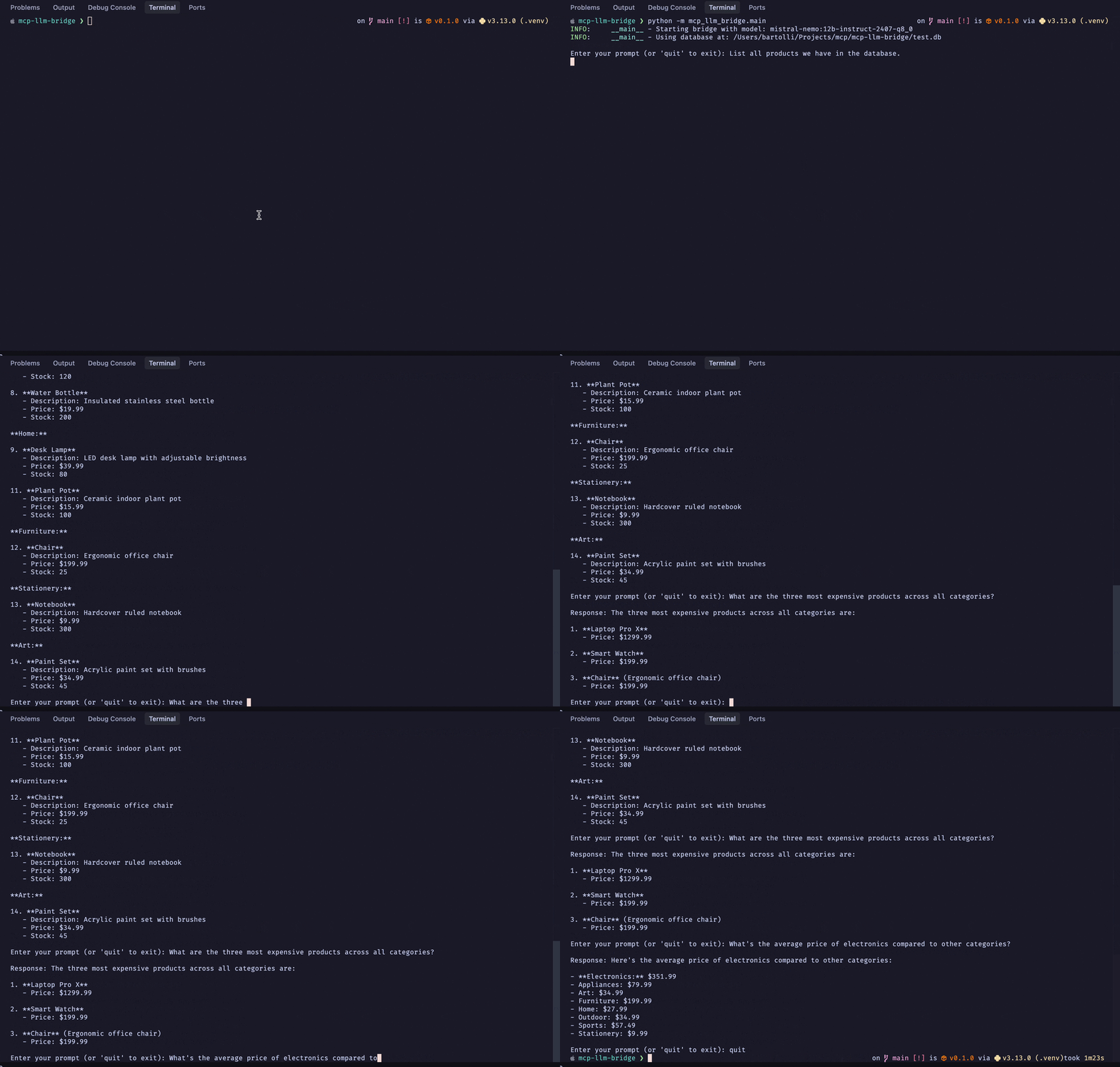
Demo:
Quick Start
# Install
curl -LsSf https://astral.sh/uv/install.sh | sh
git clone https://github.com/bartolli/mcp-llm-bridge.git
cd mcp-llm-bridge
uv venv
source .venv/bin/activate
uv pip install -e .

# Create test database
python -m mcp_llm_bridge.create_test_db
Configuration
OpenAI (Primary)
Create .env:
OPENAI_API_KEY=your_key
OPENAI_MODEL=gpt-4o # or any other OpenAI model that supports tools
Note: reactivate the environment if needed to use the keys in .env: source .venv/bin/activate
Then configure the bridge in src/mcp_llm_bridge/main.py
config = BridgeConfig(
    mcp_server_params=StdioServerParameters(
        command="uvx",
        args=["mcp-server-sqlite", "--db-path", "test.db"],
        env=None
    ),
    llm_config=LLMConfig(
        api_key=os.getenv("OPENAI_API_KEY"),
        model=os.getenv("OPENAI_MODEL", "gpt-4o"),
        base_url=None
    )
)
Additional Endpoint Support
The bridge also works with any endpoint implementing the OpenAI API specification:
Ollama
llm_config=LLMConfig(
    api_key="not-needed",
    model="mistral-nemo:12b-instruct-2407-q8_0",
    base_url="http://localhost:11434/v1"
)
Note: After testing various models, including llama3.2:3b-instruct-fp16, I found that mistral-nemo:12b-instruct-2407-q8_0 handles complex queries more effectively.
LM Studio
llm_config=LLMConfig(
    api_key="not-needed",
    model="local-model",
    base_url="http://localhost:1234/v1"
)
I didn’t test this, but it should work.
Usage
python -m mcp_llm_bridge.main

# Try: "What are the most expensive products in the database?"
# Exit with 'quit' or Ctrl+C
Running Tests
Install the package with test dependencies:
uv pip install -e ".[test]"
Then run the tests:
python -m pytest -v tests/
License
Contributing
PRs welcome.
Dev Tools Supporting MCP
The following are the main code editors that support the Model Context Protocol. Click the link to visit the official website for more information.







