
Notion Mcp Advanced
What is Notion Mcp Advanced
Notion_MCP_advanced is a lightweight Model Context Protocol (MCP) server that integrates with Notion’s API to manage a minimalist personal to-do list through Claude. It is designed for simple task management without unnecessary complexity.
Use cases
Use cases include personal task management, organizing simple projects, and integrating with Claude for voice commands to manage tasks efficiently.
How to use
To use Notion_MCP_advanced, clone the repository, set up a Python environment, create a Notion integration, and configure the server. You can then run commands through Claude to manage your to-do list.
Key features
Key features include adding new todo items with descriptions and links, viewing all todos, checking off tasks as complete, and linking external resources to tasks.
Where to use
undefined
Clients Supporting MCP
The following are the main client software that supports the Model Context Protocol. Click the link to visit the official website for more information.





Overview
What is Notion Mcp Advanced
Notion_MCP_advanced is a lightweight Model Context Protocol (MCP) server that integrates with Notion’s API to manage a minimalist personal to-do list through Claude. It is designed for simple task management without unnecessary complexity.
Use cases
Use cases include personal task management, organizing simple projects, and integrating with Claude for voice commands to manage tasks efficiently.
How to use
To use Notion_MCP_advanced, clone the repository, set up a Python environment, create a Notion integration, and configure the server. You can then run commands through Claude to manage your to-do list.
Key features
Key features include adding new todo items with descriptions and links, viewing all todos, checking off tasks as complete, and linking external resources to tasks.
Where to use
undefined
Clients Supporting MCP
The following are the main client software that supports the Model Context Protocol. Click the link to visit the official website for more information.
Content
Notion MCP Integration
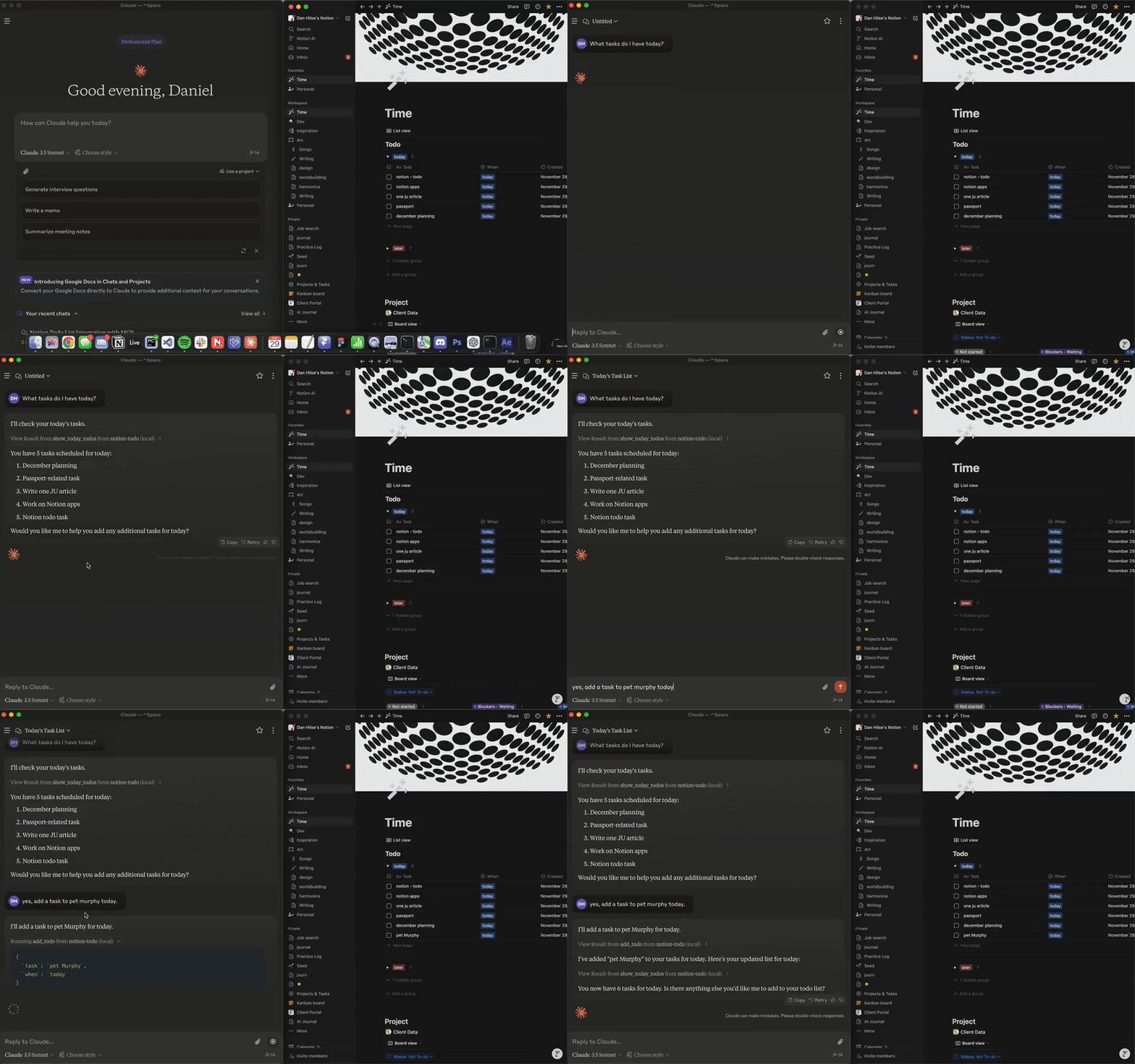
A simple Model Context Protocol (MCP) server that integrates with Notion’s API to manage my personal todo list through Claude. This is a basic implementation tailored specifically for my minimalist todo list setup in Notion.
This project is based on danhilse/notion_mcp, which is available under the MIT license.
Important Note
This is a personal project designed for a very specific use case: my simple Notion todo list that has just four properties:
- Task (title)
- Checkbox (marks if completed)
- Description (additional details)
- Link (URL or reference)
While you can use this as a starting point for your own Notion integration, you’ll likely need to modify the code to match your specific database structure and requirements.
Features
- Add new todo items with descriptions and links
- View all todos
- Check off tasks as complete
- Link external resources to tasks
Prerequisites
- Python 3.10 or higher
- A Notion account
- A Notion integration (API key)
- A Notion database that matches the exact structure described above (or willingness to modify the code for your structure)
Setup
- Clone the repository:
git clone https://github.com/yourusername/notion-mcp.git
cd notion-mcp
- Set up Python environment:
python -m venv .venv
source .venv/bin/activate  # On Windows use: .venv\Scripts\activate
uv pip install -e .
-
Create a Notion integration:
- Go to https://www.notion.so/my-integrations
- Create new integration
- Copy the API key
-
Share your database with the integration:
- Open your todo database in Notion
- Click “…” menu → “Add connections”
- Select your integration
-
Create a
.envfile:
NOTION_API_KEY=your-api-key-here
NOTION_DATABASE_ID=your-database-id-here
- Configure Claude Desktop:
{
  "mcpServers": {
    "notion-todo": {
      "command": "/path/to/your/.venv/bin/python",
      "args": [
        "-m",
        "notion_mcp"
      ],
      "cwd": "/path/to/notion-mcp"
    }
  }
}
Running the Server
The server can be run in two ways:
- Directly from the command line:
# From the project directory with virtual environment activated
python -m notion_mcp
- Automatically through Claude Desktop (recommended):
- The server will start when Claude launches if configured correctly in
claude_desktop_config.json - No manual server management needed
- Server stops when Claude is closed
Note: When running directly, the server won’t show any output unless there’s an error - this is normal as it’s waiting for MCP commands.
Usage
Basic commands through Claude:
- “Show all my todos”
- “Add a todo: check emails”
- “Add a todo: review project docs, with link: https://example.com/docs”
- “Mark todo [ID] as complete”
Limitations
- Only works with a specific Notion database structure
- No support for complex database schemas
- Basic error handling
- No support for additional properties or custom fields
- No advanced features like recurring tasks, priorities, or tags
Project Structure
notion_mcp/
├── pyproject.toml
├── README.md
├── .env                   # Not included in repo
└── src/
    └── notion_mcp/
        ├── __init__.py
        ├── __main__.py
        └── server.py      # Main implementation
License
MIT License - Use at your own risk
Acknowledgments
- Built to work with Claude Desktop
- Uses Notion’s API
Dev Tools Supporting MCP
The following are the main code editors that support the Model Context Protocol. Click the link to visit the official website for more information.







