
Actor Critic Thinking Mcp
What is Actor Critic Thinking Mcp
actor-critic-thinking-mcp is a dual-perspective thinking analysis server based on the Model Context Protocol (MCP). It utilizes the Actor-Critic methodology to provide comprehensive performance evaluations by alternating between the roles of creator/performer (actor) and analyzer/evaluator (critic).
Use cases
Use cases include evaluating artistic performances, analyzing the gap between intention and execution, providing constructive feedback, reviewing complex scenarios, conducting performance reviews, and refining creative processes through iterative feedback.
How to use
To use actor-critic-thinking-mcp, provide the current analysis content from the specified role perspective (either ‘actor’ or ‘critic’), indicate if another round of dialogue is needed, and specify the current thought number along with the total number of thoughts planned. This allows for structured and iterative analysis.
Key features
Key features include dual-perspective analysis, round tracking, balanced assessment combining empathy and objectivity, multi-dimensional evaluation for nuanced assessments, and actionable feedback for improvement.
Where to use
actor-critic-thinking-mcp can be used in various fields such as artistic performance evaluation, creative work analysis, strategic decision-making, and any scenario requiring a balanced assessment of subjective and objective criteria.
Clients Supporting MCP
The following are the main client software that supports the Model Context Protocol. Click the link to visit the official website for more information.





Overview
What is Actor Critic Thinking Mcp
actor-critic-thinking-mcp is a dual-perspective thinking analysis server based on the Model Context Protocol (MCP). It utilizes the Actor-Critic methodology to provide comprehensive performance evaluations by alternating between the roles of creator/performer (actor) and analyzer/evaluator (critic).
Use cases
Use cases include evaluating artistic performances, analyzing the gap between intention and execution, providing constructive feedback, reviewing complex scenarios, conducting performance reviews, and refining creative processes through iterative feedback.
How to use
To use actor-critic-thinking-mcp, provide the current analysis content from the specified role perspective (either ‘actor’ or ‘critic’), indicate if another round of dialogue is needed, and specify the current thought number along with the total number of thoughts planned. This allows for structured and iterative analysis.
Key features
Key features include dual-perspective analysis, round tracking, balanced assessment combining empathy and objectivity, multi-dimensional evaluation for nuanced assessments, and actionable feedback for improvement.
Where to use
actor-critic-thinking-mcp can be used in various fields such as artistic performance evaluation, creative work analysis, strategic decision-making, and any scenario requiring a balanced assessment of subjective and objective criteria.
Clients Supporting MCP
The following are the main client software that supports the Model Context Protocol. Click the link to visit the official website for more information.
Content
Actor-Critic Thinking MCP Server
A dual-perspective thinking analysis server based on Model Context Protocol (MCP), providing comprehensive performance evaluation through Actor-Critic methodology.
Showcase
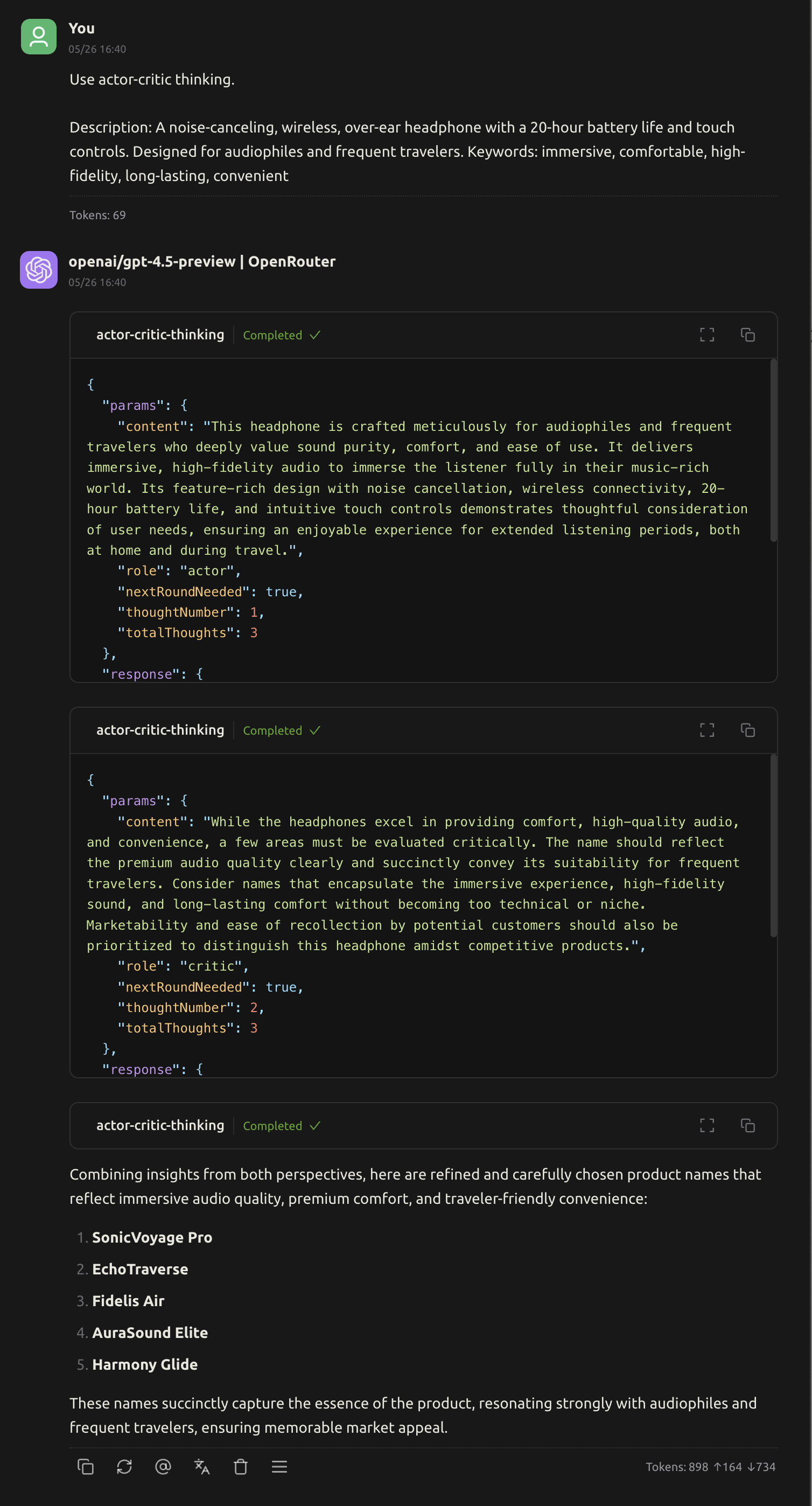
Without Actor-Critic Thinking
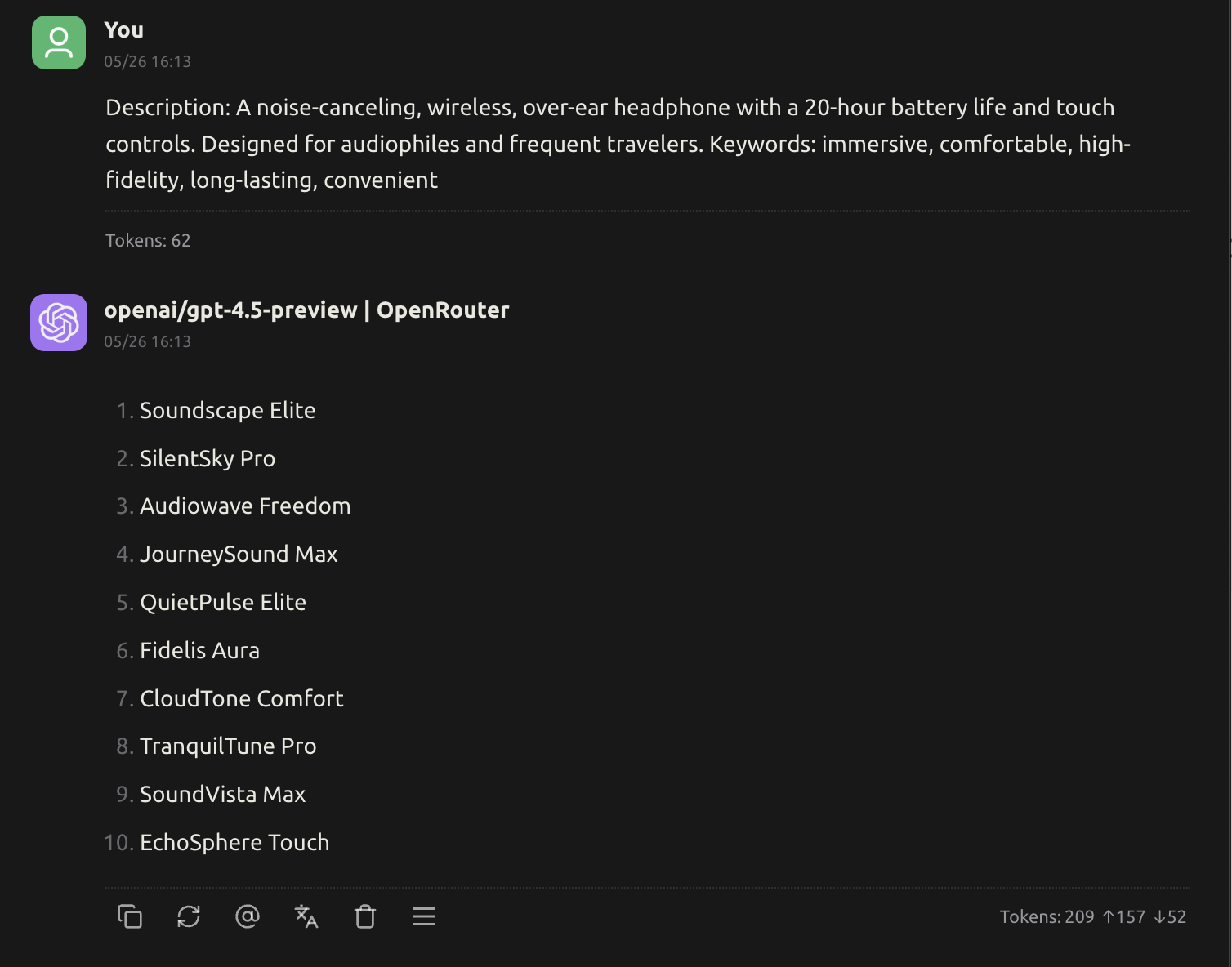
Features
- Dual-perspective Analysis: Alternates between actor (creator/performer) and critic (analyzer/evaluator) perspectives
- Round Tracking: Tracks rounds of dual-perspective analysis
- Balanced Assessment: Combines empathetic understanding with objective analysis
- Multi-dimensional Evaluation: Generates nuanced, multi-dimensional assessments
- Actionable Feedback: Provides constructive improvement suggestions
Use Cases
- Evaluating artistic performances, creative works, or strategic decisions
- Analyzing the gap between intention and execution
- Providing constructive feedback that considers both creative vision and technical execution
- Reviewing complex scenarios that require both empathy and objectivity
- Situations requiring balanced assessment of subjective and objective criteria
- Performance reviews that need both self-reflection and external evaluation
- Creative processes that benefit from iterative refinement
Parameters
Required Parameters
content(string): Current analysis content from the specified role perspectiverole(string): Perspective role, options:"actor": Actor perspective (empathetic/creative viewpoint)"critic": Critic perspective (analytical/evaluative viewpoint)
nextRoundNeeded(boolean): Whether another round of actor-critic dialogue is neededthoughtNumber(integer): Current thought number in the sequence (minimum: 1)totalThoughts(integer): Total number of thoughts planned (must be odd and >= 3)
Role Perspective Guidelines
Actor perspective should include:
- Understanding intentions, creative choices, emotional context, challenges faced
- Self-reflection on performance and decision-making process
- Explanation of creative vision and goals
Critic perspective should include:
- Technical execution analysis, effectiveness evaluation
- Audience impact assessment, comparative analysis
- Objective feedback and improvement suggestions
How to use
{
  "mcpServers": {
    "actor-critic-thinking": {
      "command": "npx",
      "args": [
        "-y",
        "mcp-server-actor-critic-thinking"
      ]
    }
  }
}
Installation and Running
# Build the project
npm run build

# Run the server
node dist/index.js
Example Usage
System prompt:
Your task is to generate creative, memorable, and marketable product names based on the provided description and keywords. The product names should be concise (2-4 words), evocative, and easily understood by the target audience. Avoid generic or overly literal names. Instead, aim to create a name that stands out, captures the essence of the product, and leaves a lasting impression.
User prompt:
Description: A noise-canceling, wireless, over-ear headphone with a 20-hour battery life and touch controls. Designed for audiophiles and frequent travelers. Keywords: immersive, comfortable, high-fidelity, long-lasting, convenient
Best Practices
- Start with either actor or critic perspective
- Alternate between perspectives to maintain balance
- Continue rounds until comprehensive analysis is achieved
- Focus on relevant performance aspects
- Generate balanced assessments that honor both perspectives
- Provide constructive, actionable feedback
- Only set
nextRoundNeededto false when analysis is complete
Dev Tools Supporting MCP
The following are the main code editors that support the Model Context Protocol. Click the link to visit the official website for more information.







