
Fused Mcp
What is Fused Mcp
Fused MCP is a framework designed for setting up MCP Servers that enable Claude and other LLMs to make HTTP requests, allowing seamless integration with APIs and executable Python code for data scientists.
Use cases
Use cases for Fused MCP include developing data science applications, creating custom agents for specific tasks, and integrating machine learning models with APIs for enhanced functionality.
How to use
To use Fused MCP, clone the repository, install the required dependencies, and follow the provided notebook workflows to set up your MCP server and create agents. You can run the server locally or use a local client if the Claude Desktop app is unavailable.
Key features
Key features include easy setup of MCP servers, integration with Claude’s Desktop App, support for User Defined Functions (UDFs), and the ability to run Python code directly from your local machine without needing a Fused account.
Where to use
undefined
Clients Supporting MCP
The following are the main client software that supports the Model Context Protocol. Click the link to visit the official website for more information.





Overview
What is Fused Mcp
Fused MCP is a framework designed for setting up MCP Servers that enable Claude and other LLMs to make HTTP requests, allowing seamless integration with APIs and executable Python code for data scientists.
Use cases
Use cases for Fused MCP include developing data science applications, creating custom agents for specific tasks, and integrating machine learning models with APIs for enhanced functionality.
How to use
To use Fused MCP, clone the repository, install the required dependencies, and follow the provided notebook workflows to set up your MCP server and create agents. You can run the server locally or use a local client if the Claude Desktop app is unavailable.
Key features
Key features include easy setup of MCP servers, integration with Claude’s Desktop App, support for User Defined Functions (UDFs), and the ability to run Python code directly from your local machine without needing a Fused account.
Where to use
undefined
Clients Supporting MCP
The following are the main client software that supports the Model Context Protocol. Click the link to visit the official website for more information.
Content
Fused MCP Agents: Setting up MCP Servers for Data



Documentation 🌪️ Read the announcement 🔥 Join Discord
MCP servers allow LLMs like Claude to make HTTP requests, connecting them to APIs & executable code. We built this repo for ourselves & anyone working with data to easily pass any Python code directly to your own desktop Claude app.
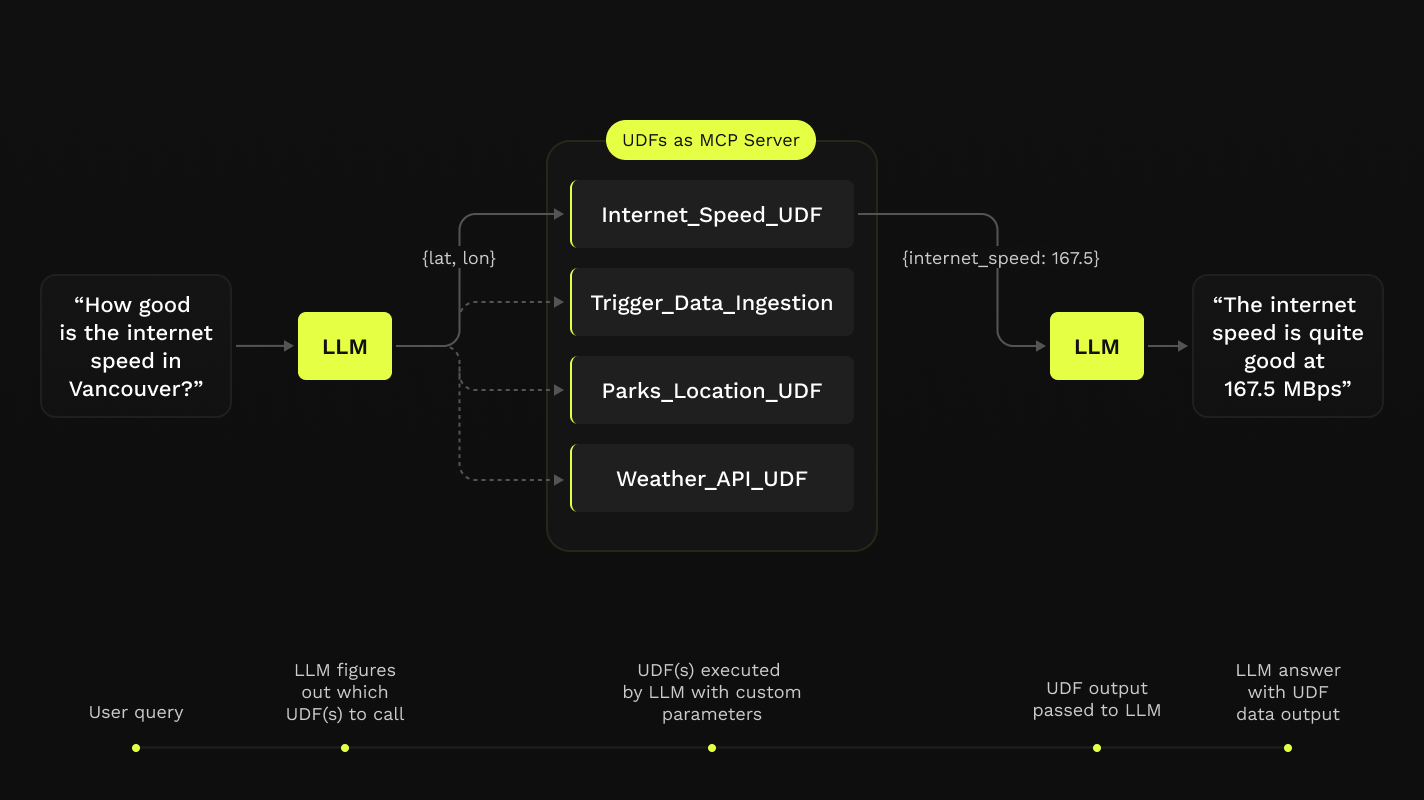
This repo offers a simple step-by-step notebook workflow to setup MCP Servers with Claude’s Desktop App, all in Python built on top of Fused User Defined Functions (UDFs).

Requirements
- Python 3.11
- Latest Claude Desktop app installed (macOS & Windows)
If you’re on Linux, the desktop app isn’t available so we’ve made a simple client you can use to have it running locally too!
You do not need a Fused account to do any of this! All of this will be running on your local machine.
Installation
-
Clone this repo in any local directory, and navigate to the repo:
git clone https://github.com/fusedio/fused-mcp.git cd fused-mcp/ -
Install
uv
if you don’t have it:macOS / Linux:
curl -LsSf https://astral.sh/uv/install.sh | shWindows:
powershell -ExecutionPolicy ByPass -c "irm https://astral.sh/uv/install.ps1 | iex" -
Test out the client by asking for its info:
uv run main.py -h -
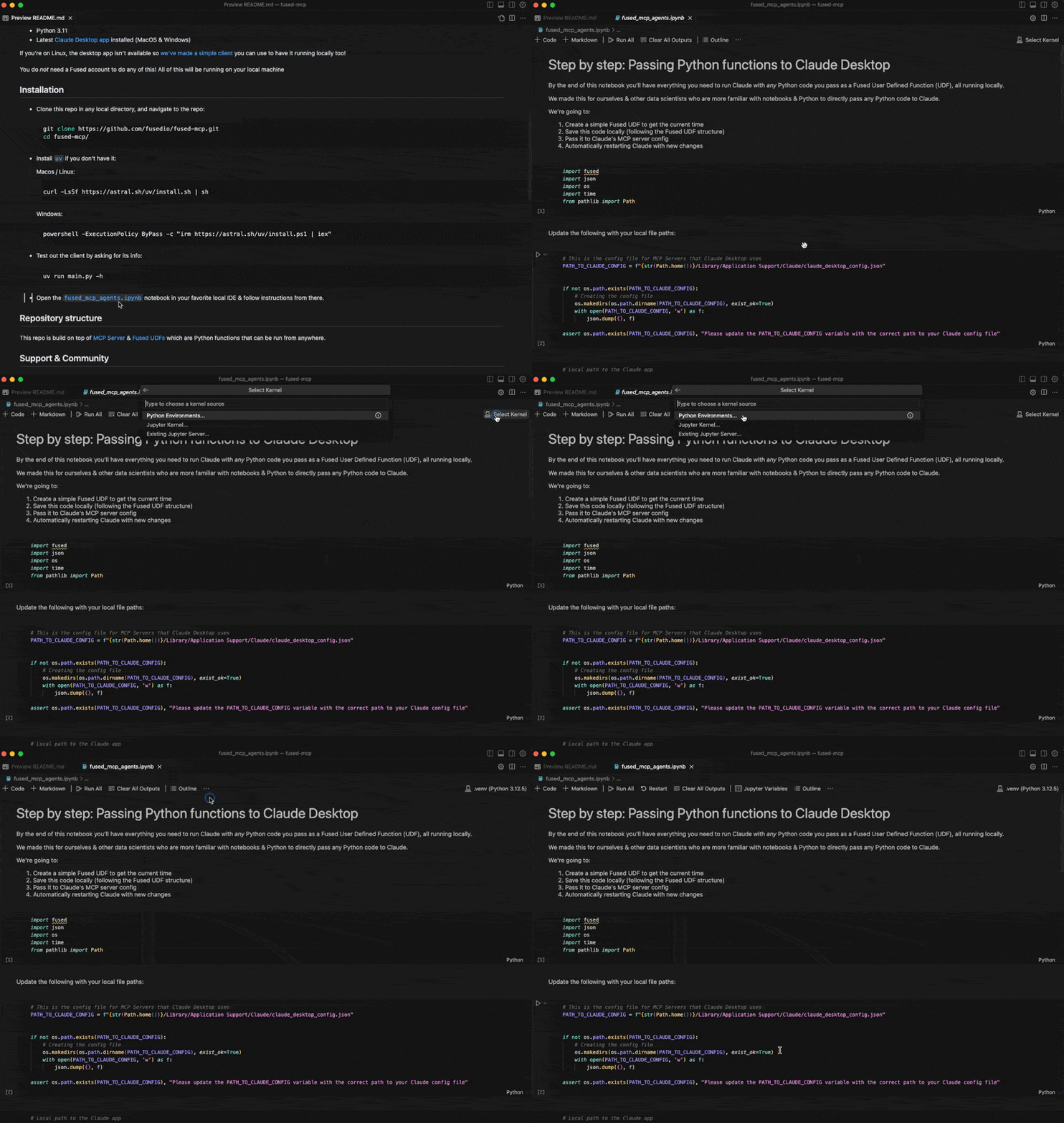
Start by following our getting-started notebook
fused_mcp_agents.ipynbin your favorite local IDE to get set up and then make your way to the more advanced notebook to make your own Agents & functions
Repository structure
This repo is build on top of MCP Server & Fused UDFs which are Python functions that can be run from anywhere.
Support & Community
Feel free to join our Discord server if you want some help getting unblocked!
Here are a few common steps to debug the setup:
- Running
uv run main.py -hshould return something like this:
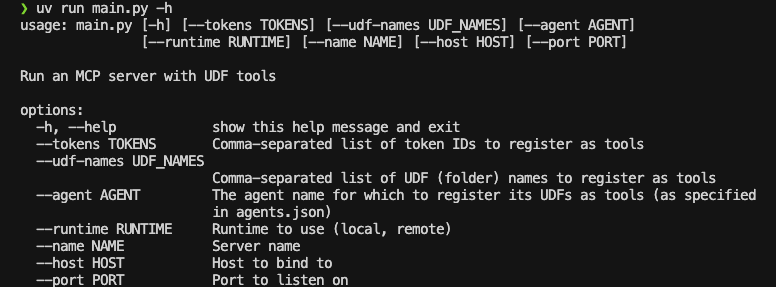
- You might need to pass global paths to some functions to the
Claude_Desktop_Config.json. For example, by default we only passuv:
{
  "mcpServers": {
    "qgis": {
      "command": "uv",
      "args": [
        "..."
      ]
    }
  }
}
But you might need to pass the full path to uv, which you can simply pass to common.generate_local_mcp_config in the notebook:
# in fused_mcp_agents.ipynb
import shutil

common.generate_local_mcp_config(
    config_path=PATH_TO_CLAUDE_CONFIG,
    agents_list = ["get_current_time"],
    repo_path= WORKING_DIR,
    uv_path=shutil.which('uv'),
)
Which would create a config like this:
{
  "mcpServers": {
    "qgis": {
      "command": "/Users/<YOUR_USERNAME>/.local/bin/uv",
      "args": [
        "..."
      ]
    }
  }
}- If Claude runs without showing any connected tools, take a look at the MCP Docs for troubleshooting the Claude Desktop setup
Contribute
Feel free to open PRs to add your own UDFs to udfs/ so others can play around with them locally too!
Using a local Claude client (without Claude Desktop app)
If you are unable to install the Claude Desktop app (e.g., on Linux), we provide
a small example local client interface to use Claude with the MCP server configured
in this repo:
NOTE: You’ll need an API key for Claude here as you won’t use the Desktop App
-
Create an Anthropic Console Account
-
Create an Anthropic API Key
-
Create a
.env:touch .env -
Add your key as
ANTHROPIC_API_KEYinside the.env:# .env ANTHROPIC_API_KEY = "your-key-here" -
Start the MCP server:
uv run main.py --agent get_current_time -
In another terminal session, start the local client, pointing to the address of the server:
uv run client.py http://localhost:8080/sse
Dev Tools Supporting MCP
The following are the main code editors that support the Model Context Protocol. Click the link to visit the official website for more information.







