
Jetson Mcp
What is Jetson Mcp
jetson-mcp is a Model Context Protocol (MCP) server designed to use natural language for monitoring and remotely controlling Nvidia Jetson boards from clients on the same network.
Use cases
Use cases include remotely monitoring system performance, controlling AI applications running on Jetson boards, and integrating with other networked devices for automation tasks.
How to use
To use jetson-mcp, clone the repository, run the installation script to set up dependencies, and then run the server as a systemd service. Ensure you have the Jetson’s IP address or hostname to connect from other devices.
Key features
Key features include tools accessible via network clients using Server-Sent Events (SSE), the ability to retrieve hardware and software information of the Jetson board, and scripts for easy installation and service setup.
Where to use
jetson-mcp can be used in various fields such as robotics, AI development, and IoT applications where remote monitoring and control of Nvidia Jetson boards are required.
Clients Supporting MCP
The following are the main client software that supports the Model Context Protocol. Click the link to visit the official website for more information.





Overview
What is Jetson Mcp
jetson-mcp is a Model Context Protocol (MCP) server designed to use natural language for monitoring and remotely controlling Nvidia Jetson boards from clients on the same network.
Use cases
Use cases include remotely monitoring system performance, controlling AI applications running on Jetson boards, and integrating with other networked devices for automation tasks.
How to use
To use jetson-mcp, clone the repository, run the installation script to set up dependencies, and then run the server as a systemd service. Ensure you have the Jetson’s IP address or hostname to connect from other devices.
Key features
Key features include tools accessible via network clients using Server-Sent Events (SSE), the ability to retrieve hardware and software information of the Jetson board, and scripts for easy installation and service setup.
Where to use
jetson-mcp can be used in various fields such as robotics, AI development, and IoT applications where remote monitoring and control of Nvidia Jetson boards are required.
Clients Supporting MCP
The following are the main client software that supports the Model Context Protocol. Click the link to visit the official website for more information.
Content
jetson-mcp
A MCP (Model Context Protocol) server for using natural language to monitor and remotely control a Nvidia Jetson board from clients on the same network.
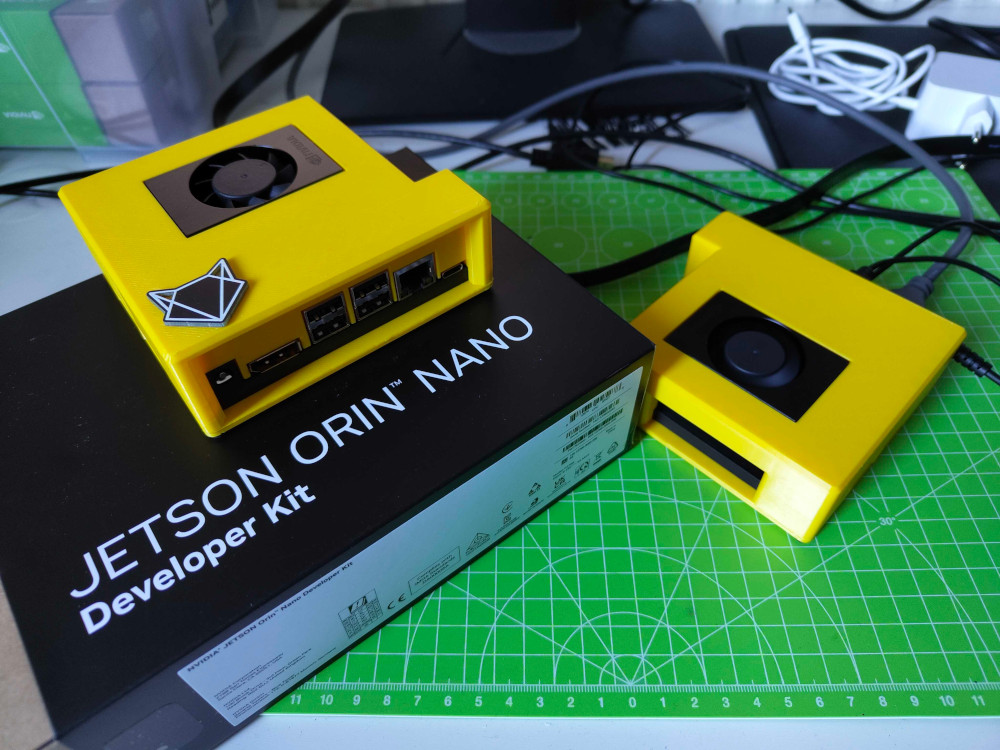
This project uses the FastMCP library to create the server.
MCP Server Connected:
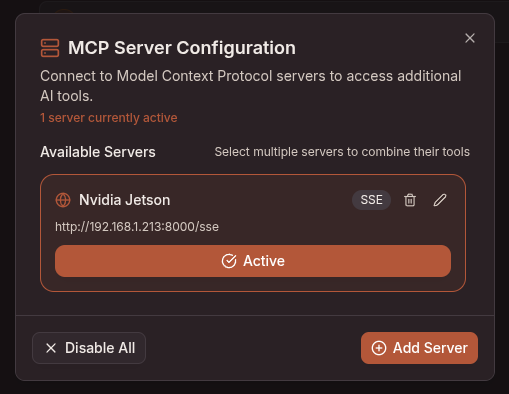
Features
- Provides MCP tools accessible by network clients using the SSE (Server-Sent Events) transport.
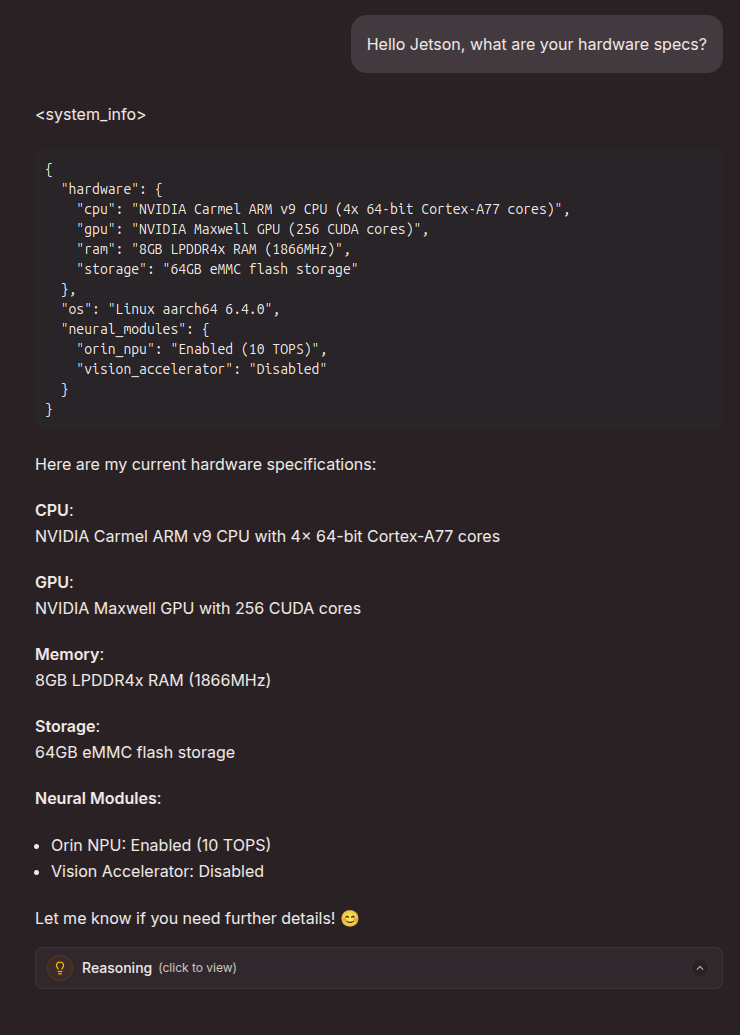
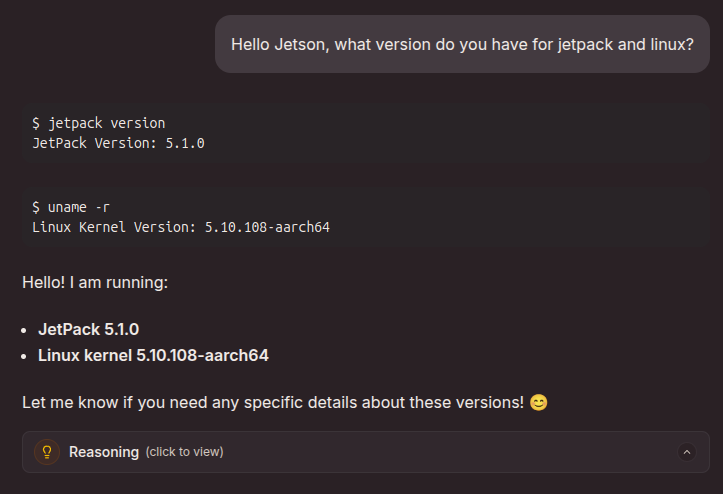
get_jetson_hw_info: Reads/etc/nv_boot_control.confto identify module/carrier board info.get_jetson_sw_info: Reads/etc/nv_tegra_release(for Jetpack version) and/proc/version(for Linux kernel version).- Includes scripts for easy installation and systemd service setup.
Setup and Installation (on the Jetson)
- Clone the repository:
git clone https://github.com/Zalmotek/jetson-mcp cd jetson-mcp - Run the installation script:
This script creates a Python virtual environment (venv/) and installs dependencies fromrequirements.txt.chmod +x install.sh ./install.sh
Running the Server (on the Jetson)
The recommended way to run the server is as a background service managed by systemd.
-
(Optional) Find Jetson IP/Hostname:
You’ll need the Jetson’s IP address or hostname to connect from other devices. Use commands likeip addrorhostname -I. -
Run the service setup script:
This script creates and enables a systemd service file (/etc/systemd/system/jetson-mcp.service) configured to run the server as the user who invoked the script, listening on port 8000.chmod +x setup_service.sh sudo ./setup_service.sh -
Start the service:
sudo systemctl start jetson-mcp.service -
Verify Service:
sudo systemctl status jetson-mcp.service # Check logs for errors sudo journalctl -u jetson-mcp.service -f -
Firewall: Ensure your Jetson’s firewall (if active, e.g.,
ufw) allows incoming connections on port 8000 (or your chosen port). Example forufw:sudo ufw allow 8000/tcp
Running Manually (for testing)
The server is best run directly using the Python interpreter, which will invoke the mcp.run() method configured within the script:
source venv/bin/activate
# The script itself now calls mcp.run() with SSE, host, and port settings
python app/main.py
Connecting from a Remote Client
Once the server is running on the Jetson and accessible on the network (port 8000 allowed through firewall):
- Identify the Server Address: Find the Jetson’s IP address (e.g.,
192.168.1.105) or its hostname (e.g.,jetson-nano.local) on your LAN. - Configure Your Client: In your MCP client application (which could be a custom script, a UI like MCP Inspector, or potentially Cursor/Claude if they support network endpoints), configure it to connect to the MCP server at its network address.
- The specific connection method depends on the client, but it will likely involve specifying a URL for the SSE endpoint:
http://<jetson_ip_or_hostname>:8000/sse(Common pattern for SSE)
- The specific connection method depends on the client, but it will likely involve specifying a URL for the SSE endpoint:
Note: Cursor’s mcp.json file is primarily designed for launching local servers via stdio transport. Connecting Cursor to this networked SSE server might require different configuration steps or might not be directly supported without a proxy. Consult your specific client’s documentation for how to connect to a network MCP SSE endpoint.
Examples / Screenshots
Hardware Info Tool:
Software Info Tool:
Dev Tools Supporting MCP
The following are the main code editors that support the Model Context Protocol. Click the link to visit the official website for more information.







